
What is a POS System? Your Complete Guide to Point of Sale Technology
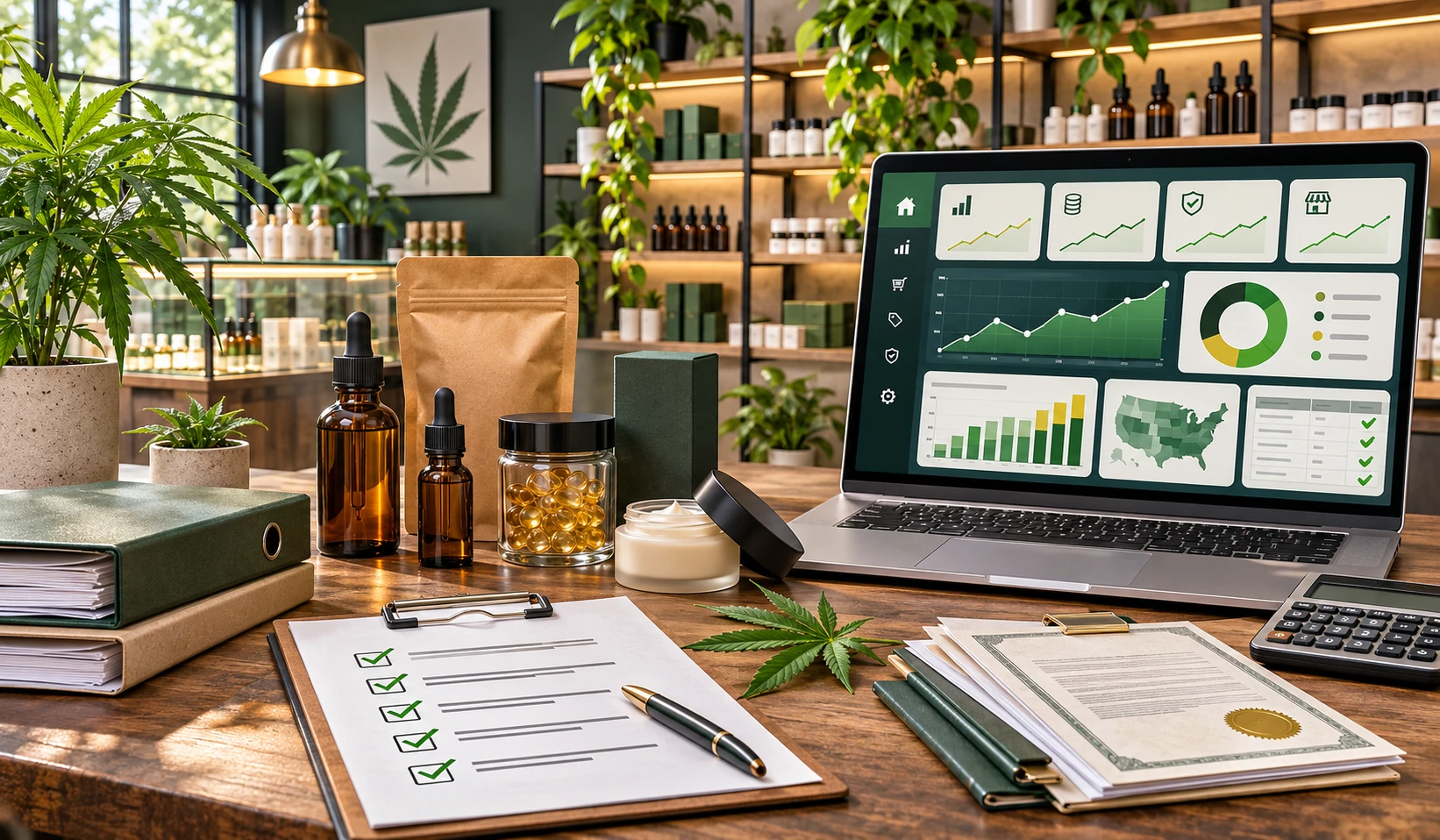
If you’re just starting a CBD company, there are three hurdles you’ll need to overcome before selling your first product: federal hemp compliance, state and local licensing, and a payment processing system that won’t be frozen the first time you make sales. Most new vendors who write a CBD business plan focus only on inventory and the storefront, and are surprised by the other two.
This guide walks you through what’s actually required to start a CBD business in 2026, what it costs, and the compliance details that trip up new retailers most often — including a federal regulatory change currently in motion that every CBD business owner needs to know about before launching.
One note before you begin: CBD and hemp law is not settled at this time, and a federal rule change will come into effect later this year (2026). This guide is not intended to be legal advice; it is based on the regulatory environment at the time of publication. Always check with your state’s agriculture or health department for current regulations, and seek counsel from an attorney specializing in hemp/cannabis law before committing to inventory or a lease.
Is CBD Legal to Sell? The Federal Starting Point
The 2018 Farm Bill is the legal basis for the sale of CBD. The law removed hemp from the Controlled Substances Act entirely, as long as it contains no more than 0.3% delta-9 THC by dry weight. Almost every CBD company in the country is built on that one definition, and it’s still the law today.
However, “federally legal to sell” doesn’t mean “federally legal to sell however you want.” The FDA has clearly stated that CBD cannot be lawfully marketed as a dietary supplement or added to food and beverages, because CBD was studied and approved as a pharmaceutical ingredient (in the drug Epidiolex) before it was sold as a supplement — a technical disqualification under food and drug law. In practice, enforcement has been inconsistent, which is part of why so many CBD products are sold as supplements anyway. New retailers should understand this is a real legal gray area, not settled ground.
The 2026 Federal Hemp Rule Change — What's Actually Happening
If you’re starting a CBD business right now, this is the one thing you really need to understand. In November 2025, Congress passed a new federal law that changes how hemp is defined. The old rule, from the 2018 Farm Bill, only looked at delta-9 THC levels. The new rule looks at total THC instead, counting every type of THC in the product, not just one. Once it takes effect, it will close what people in the industry call the “Farm Bill loophole,” which is how intoxicating products like Delta-8, THC edibles and vapes, THCa flower, and synthetic cannabinoids like HHC were able to be sold legally across the country.
At the time of writing, the effective dates are December 11, 2026 for most hemp-derived cannabinoid products, and November 12, 2026 for synthetic cannabinoids specifically. Until those dates, the original 2018 Farm Bill definition remains the controlling federal standard.
An important distinction for a CBD-focused business is that this change is primarily aimed at intoxicating hemp products. Non-intoxicating CBD isolate products with minimal total THC are expected to remain compliant under the new standard — but “minimal” is a specific, low numeric threshold, not a loose guideline, and some full-spectrum or broad-spectrum products that were compliant under the old rule may not be compliant under the new one.
Quickvee Tip: If your product sourcing includes anything beyond CBD isolate, have a direct conversation with your supplier and, ideally, a hemp attorney before the deadline hits.
State and Local Licensing: What You Actually Need

There is no specific federal license for CBD retail. What you need depends entirely on your state, and requirements fall into three categories.
Tier 1
No CBD-specific license required
A number of states treat CBD like any other retail product — you need a standard business license and sales tax permit, but no separate hemp or cannabinoid registration.
Tier 2
Hemp retailer registration required
Some states require retailers to register before selling CBD, even though it's a lighter-weight process than a full license.
Tier 3
Dedicated CBD/cannabinoid retail license
A smaller number of states have built out a full licensing program for cannabinoid retail.
- Texas: requires a DSHS Hemp Retail Registration at $5,150 per year, per location, through the Department of State Health Services — and a separate, more involved Consumable Hemp Product License if you relabel or repackage products.
- Louisiana: requires retailer registration as well, and explicitly includes online and remote sellers in that requirement.
- New York: offers a Cannabinoid Hemp Retail License through its Business Express program, at $300 per retail location, or a $25 per month temporary permit (maximum 3 months) for a new business before it receives full approval.
Step-by-Step Guide to Start a CBD Business in Your State
- Register your business entity with your state.
- Obtain an EIN from the IRS — necessary for tax, banking and most merchant account applications.
- Verify state and local CBD/hemp license requirements before signing a lease or ordering inventory, as some require weeks of approval.
- Get a seller’s permit or sales tax license from your state’s department of revenue.
- Secure a CBD-friendly, high-risk merchant account — don’t assume a standard payment processor will support CBD sales (more on this below).
- Buy products from suppliers that provide current-batch COAs from third-party laboratories.
- Set up labeling that follows the rules. Your product labels should show the THC content and a batch or lot number. More and more states are also starting to require a scannable QR code that links to the lab test results (COA).
- Get general liability and product liability insurance. CBD is still a gray area, so general insurance won’t suffice unless you tell the insurer that CBD is a high-risk business.
- Select a point-of-sale system designed for age-restricted and compliance-focused retail, so you don’t have to manually manage inventory, age verification, and compliance logging.
- Train staff on what they can and can’t say — unsubstantiated health claims (“this cures anxiety,” “this treats pain”) are one of the most common triggers for FDA warning letters, and staff repeating supplier marketing claims at the counter creates the same legal exposure as printing them on a label.
How Much Does It Cost to Start a CBD Business?
| Cost category | Typical range |
|---|---|
| Business entity formation (LLC) | $50–$500 (state-dependent) |
| General business license | $50–$400 |
| State CBD/hemp retailer registration or license | $0–$300+ per location |
| General + product liability insurance | $500–$2,000/year |
| Initial inventory | $5,000–$20,000+ |
| POS software | $0–$200/month |
| POS hardware | $500–$2,500 |
| Third-party lab testing (if private labeling) | $100–$500 per batch |
| Store buildout/signage | Varies widely by location and lease condition |
These are general planning ranges based on common startup cost patterns in specialty retail, not quotes from any specific vendor or state — your actual numbers will shift based on location, store size, and how many of these steps you handle yourself versus hire out.
Ready to Power Your Smoke Shop?
Get a Free Demo of Quickvee’s Specialized POS for Smoke Shops!
CBD Compliance Essentials: COAs, Labeling, and Marketing Claims
Certificate of Analysis (COA)
A Certificate of Analysis (COA) is a lab report that proves what’s actually in your product. An independent lab tests it, confirms the THC level is within legal limits, and checks for things like pesticides, heavy metals, and leftover solvents. Keep a current COA on file for every product and every batch you sell. If a regulator or a worried customer asks about it, “let me check with my supplier” doesn’t look great — having the document ready to show does.
Labeling
Labeling requirements vary by state, but commonly include accurate THC/CBD content, a batch or lot number tying the product back to its COA, and net weight or volume. A growing number of states now require (or strongly encourage) a QR code on the label linking directly to that batch’s COA — worth adopting even where it isn’t yet mandatory, since it’s a quick way to build customer trust.
Marketing claims
Marketing claims are where many CBD retailers get into real legal trouble. The FDA has already sent warning letters to CBD companies claiming their products treat, cure, or prevent things like chronic pain, anxiety, or cancer, and that rule applies everywhere: your website, packaging, social media, and even what staff say at checkout. Describe the product. Don’t promise results.
Payment Processing: Why CBD Is Considered High-Risk
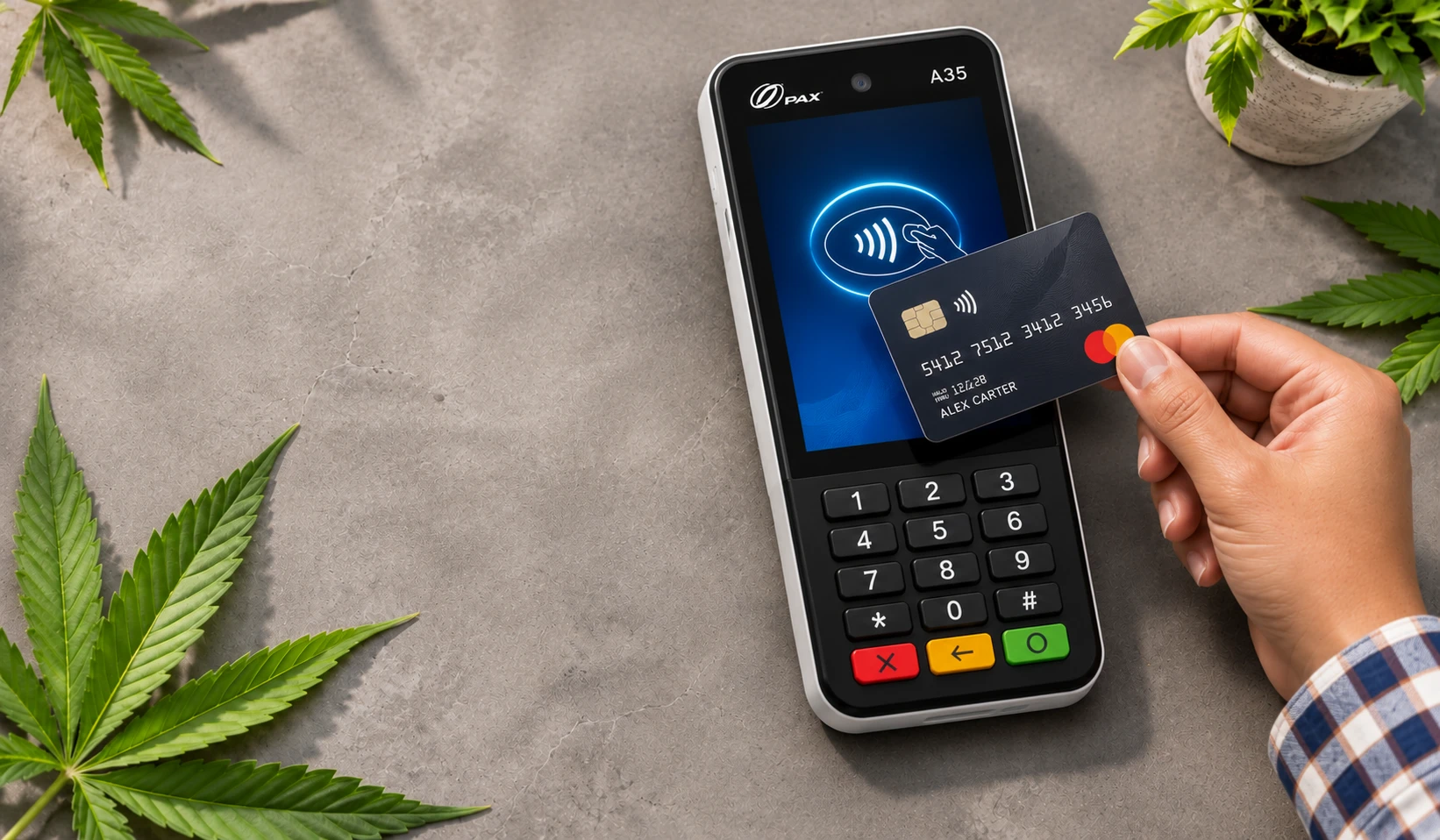
Most mainstream payment processors — including several of the biggest names in small-business payments — explicitly prohibit CBD sales in their terms of service, largely because of the same federal/state regulatory ambiguity covered above. Businesses that don’t realize this upfront sometimes sign up with a standard processor, build up a sales history, and then have their account frozen without warning once the processor’s compliance team flags the product category — which can mean weeks of inaccessible funds during the review.
The practical fix is working with a payment processor or POS provider that explicitly supports CBD and other high-risk retail categories from the start, rather than discovering the problem after your first few months of sales.
Quickvee Advantage: If you want the full picture before choosing a processor, we’ve written a deeper breakdown of this exact issue in our CBD payment processing guide.
Common Compliance Mistakes New CBD Retailers Make
- Assuming federal legality means no further paperwork. State registration requirements apply on top of federal hemp law, not instead of it.
- Marketing CBD as a dietary supplement or making health claims, which runs directly against the FDA’s stated position regardless of how common the practice is in the industry.
- Not tracking the 2026 federal rule change, especially for any full-spectrum or broad-spectrum products that may carry more total THC than the new standard allows.
- Skipping COA documentation until a regulator or a customer asks for it.
- Signing up with a standard payment processor without confirming it explicitly supports CBD, and getting blindsided by a frozen account later.
Frequently Asked Questions
There is no single specific license required to run a CBD business. Licensing requirements depend on the state. Some states require only a standard business license to operate a CBD store, while others require hemp retailer registration, which may cost around $200. Certain states may also require a dedicated cannabinoid retail license.
Although hemp-derived CBD is legal for interstate shipping, not all online products are in compliance in each state. Numerous states have individual retailer registration requirements for CBD sales, including direct-to-consumer orders. A few state-level requirements may be necessary before businesses can accept orders from the rest of the U.S. that sell CBD.
New CBD store owners usually need a startup budget of around $8,000 to $30,000 or more to get the business off the ground. This amount may include company registration, required licenses, opening inventory, insurance coverage, and a reliable POS system. The final cost can change widely depending on the store's location, size, product range, and the amount of stock purchased before launch.
CBD businesses are always considered high-risk due to federal and state regulations. If businesses sign up with payment processors without disclosing their product category, their accounts may be banned or frozen.
A federal rule change redefines hemp using a total-THC standard instead of the previous delta-9-only threshold, primarily targeting intoxicating hemp-derived products like Delta-8 and THCa flower. The new definition takes effect December 11, 2026 for most products (November 12, 2026 for synthetic cannabinoids). Non-intoxicating CBD isolate products are expected to remain compliant, but full-spectrum and broad-spectrum products should be checked against the new standard before that date.
Recent Blogs
POS System Cost by Business Size: Single Store vs. Multi-Location
October 21, 2026
CBD POS Software vs. Payment Processing: Key Differences
September 7, 2026
Is THC Banned in 2026? State-by-State Guide for Retailers
August 24, 2026
Square CBD Shutdown: What Hemp and CBD Merchants Need to Do Now
August 11, 2026
Delta 8 vs Delta 9 vs THCA: 2026 Smoke Shop Guide
July 16, 2026