
How to Increase Smoke Shop Sales with a Customer Loyalty Program
Introduction
There’s one customer who always came in on Thursdays. One was purchased twice, they talked for a minute and they went their separate ways. You’d recognize him in a lineup. Then one week he stopped, and you didn’t notice for two months — because there was nothing in your system that could tell you he was gone.
That’s the quiet problem in most smoke shops. You’re good at the sale in front of you. You’re flying blind on the customer who didn’t come back. And on the margins most shops run — especially on regulated products where the markup is already tight — the customer who comes back is worth far more than the one you spend money trying to attract.
A loyalty program fixes both problems at once. It gives customers a reason to come back to you instead of the shop a mile away, and it gives you the data to know who your best customers are and when one of them slips away. Here’s how to build one that actually moves the sales number, not just one that hands out points nobody redeems.
The retention math nobody runs
Start with why this matters, because the economics are more lopsided than most owners assume.
Acquiring a new customer — through ads, signage, promotions, foot traffic you paid for one way or another — costs money every time. Keeping an existing customer costs almost nothing. They already know where you are. They already trust you. The only question is whether they come to you or to the competitor with the same products down the street.
Here’s the part that makes loyalty a profit lever rather than a perk: on thin-margin categories, a small lift in repeat rate beats a big lift in new traffic. If your average regular visits twice a month and you nudge that to three times, you’ve grown that customer’s annual value by 50% without spending a dollar on acquisition. Do that across a few hundred regulars and the revenue line moves in a way no sidewalk sign matches.
Retention is also where the defensibility is. Any competitor can undercut your price on a specific SKU for a week. What they can’t easily copy is a customer who has 340 points banked with you and would lose them by switching. The points are a switching cost. That’s the real mechanism — not the reward itself, but the reason to not go elsewhere.
Why punch cards and bolt-on apps fall short
Most shops that try loyalty start with one of two tools, and both have problems.
Punch cards are cheap and instantly understood, but they get lost, they get forgotten at home, they get gamed (a sympathetic cashier punches an extra hole), and most importantly they give you zero data. A punch card tells you nothing about who the customer is, what they buy, or when they stopped coming. It’s a discount mechanism, not a loyalty program.
Third-party loyalty apps solve the data problem but create new ones. They cost a monthly fee on top of your POS. They usually don’t talk to your point-of-sale system, so your cashier is running two screens and reconciling them by hand. And the customer has to download yet another app they’ll forget about. Adoption dies in the friction.
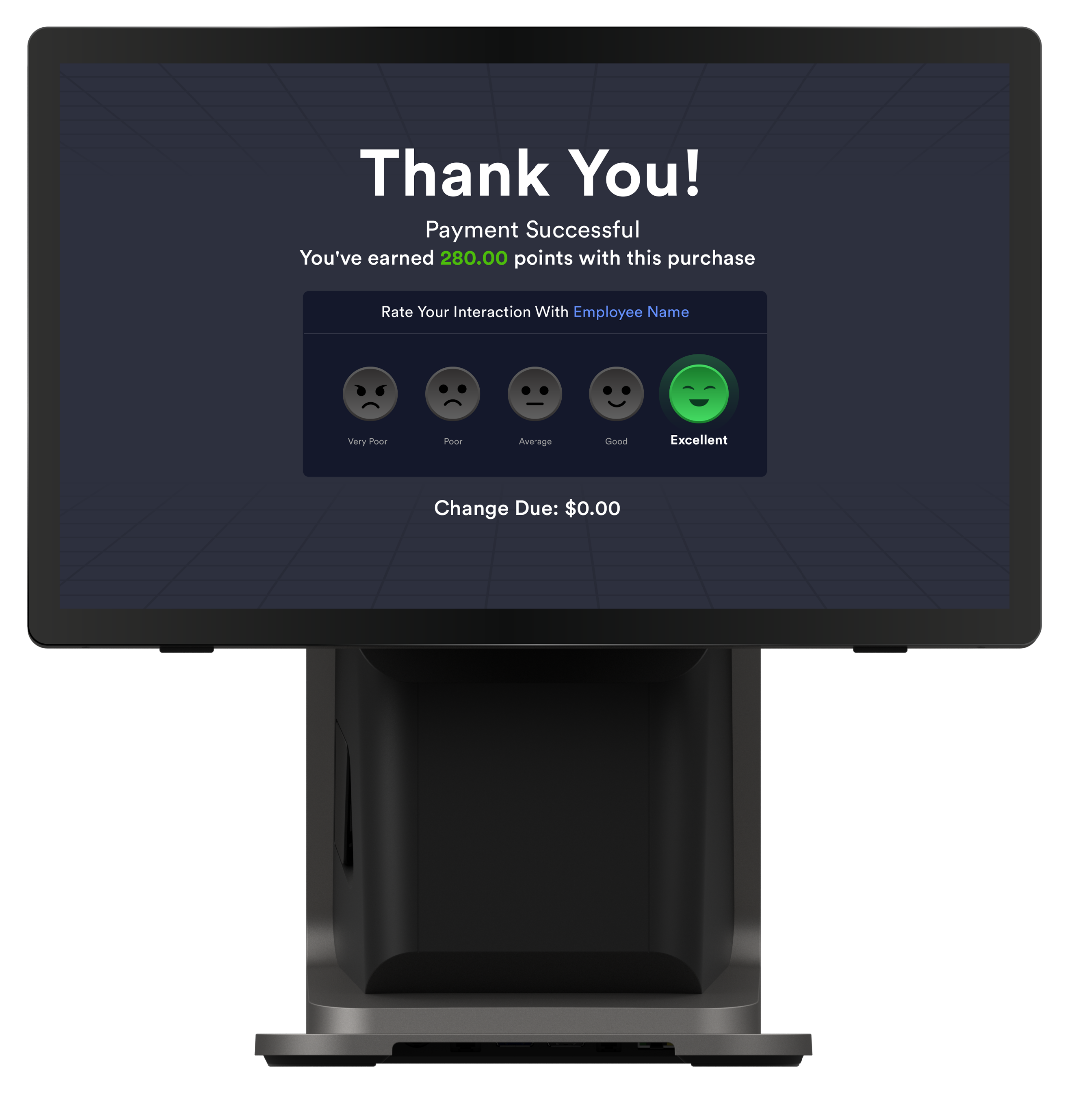
The version that works is loyalty built directly into the POS. Points accrue automatically at checkout with no separate app and no physical card. The cashier doesn’t run a second system. And because it lives in the POS, every point earned is tied to actual purchase data you can use later. Quickvee builds its loyalty program (Quickvee Points) into the POS at no additional cost for exactly this reason — the integration is the whole point, and charging extra for it would defeat the purpose.
Designing a program that works
A loyalty program lives or dies on its structure. Too stingy and customers never reach a reward, so the program feels pointless. Too generous and you’re eroding margin you can’t afford. Here’s a defensible starting point you can adjust once you have data.
Set the earn rate
A clean, easy-to-explain starting structure is one point per dollar spent. Customers can do the math in their head, which matters more than you’d think — a program nobody understands is a program nobody engages with. In Quickvee you set the points-per-dollar rate, the cash value of each point, and the minimum points required before a customer can redeem, all in your program settings.
Make the first reward easy to reach
The single most important design choice is how fast a brand-new customer hits their first reward. The first redemption is what converts a one-time buyer into a habit. Set the first reward low enough that a customer reaches it in two or three visits, not twenty. Once they’ve redeemed once and felt the value, they’re in. You can structure later rewards to require more points; it’s the first one that does the work.
Decide the point value honestly
Most retail loyalty programs run an effective discount of somewhere between 1% and 5% of spend returned as rewards. Where you land depends on your margins. On accessories and glass where margin is healthy, you can afford to be generous. On regulated products where margin is thin, keep the effective return modest. The flexibility to set different rules for different categories is what lets you do this without bleeding margin — which leads to the part most loyalty advice skips entirely.
The compliance wrinkle most advice ignores
Here’s something generic loyalty articles never mention: in some states, offering discounts or price promotions on tobacco products is restricted or prohibited. A loyalty program that lets customers redeem points for money off a carton of cigarettes can, depending on your state, run into tobacco price-promotion rules.
This is why category-level control matters. Quickvee lets you set which product categories earn points and which categories allow redemption separately. So you can let tobacco purchases earn points (building the customer’s balance and your data) while restricting redemption to non-tobacco categories like accessories, glass, or drinks where discounting is unrestricted. The customer still feels rewarded for all their spending; the redemption just steers to compliant categories.
Confirm your own state’s rules before launching — this varies and it changes. But the capability to separate earning from redemption by category is what makes a compliant program possible in the first place. A loyalty tool that can’t do that forces an all-or-nothing choice that may not be legal where you operate.
Six ways to actually drive sales once it's live
Turning the program on is step one. These are the moves that turn it into a real sales driver.
Run double-points days on your slow days. Every shop has a dead day — usually a Tuesday or Wednesday. Run double points on that day only. You shift traffic from your busy days (when you'd have gotten the sale anyway) into your dead day, smoothing your week and giving customers a reason to come in when they otherwise wouldn't. Quickvee supports double-points promotions without conflicting with your other discount rules.
Win back lapsed customers automatically. This is the highest-value use of the data. Pull a segment of customers who haven't purchased in 45–60 days and send them a targeted offer — bonus points, or a small reward waiting for them. These are people who already liked you and drifted. Winning one back costs a fraction of finding a new customer, and the loyalty data is what makes the segment visible in the first place. Quickvee's reporting surfaces your inactive shoppers specifically for this.
Use birthday and anniversary offers. Automated birthday rewards convert at high rates because they feel personal and they're timed to a moment the customer is inclined to treat themselves. Set it once and it runs on its own. A customer who comes in to redeem a birthday reward almost always buys more than the reward is worth.
Stack loyalty with promotions, don't silo it. Loyalty points and your other deals (Mix N' Match pricing, BOGO, coupons) should work together, not fight each other. A customer who uses a coupon should still earn points on the purchase. Quickvee is built so loyalty stacks with discounts without rule conflicts, which keeps the customer earning on every transaction and removes the friction of "sorry, you can't use both."
Segment your best customers and treat them differently. Your top 20% of customers likely drive a majority of your revenue. Once the program identifies them, give them something the casual customer doesn't get — early access to a limited drop, a higher point multiplier, a bigger birthday reward. The cost is small and the message ("we know who you are and you matter") is exactly what keeps a high-value customer from shopping around.
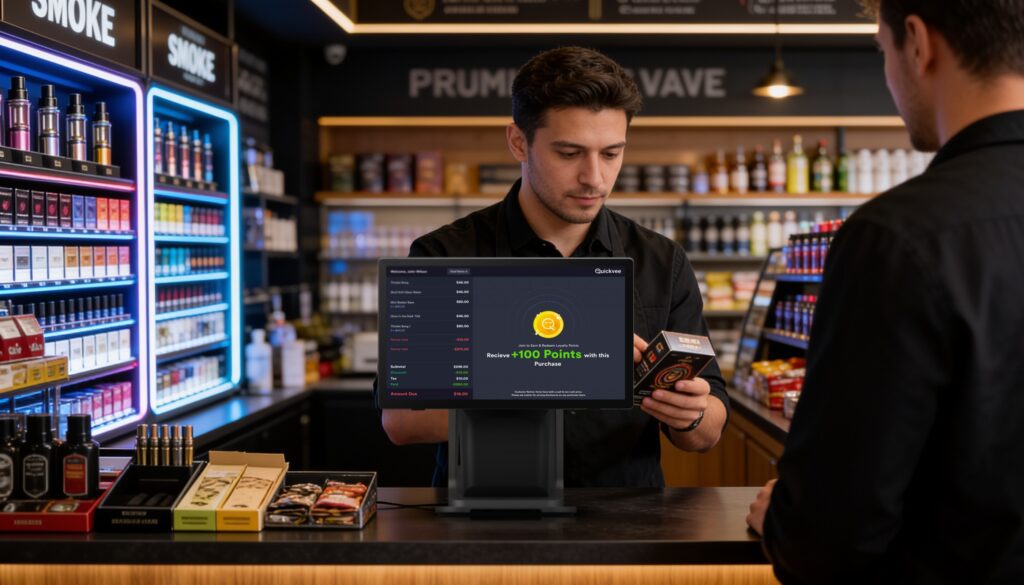
Promote enrollment at the counter, every time. The program only works if people are in it. Train cashiers to ask every customer to enroll — it takes a phone number, not a form. Put signage at the register showing the first reward. The faster you build the enrolled base, the faster the data and the repeat sales compound. A program with 40 members does nothing; a program with 1,200 members runs your retention for you.
FAQs
Nothing extra. Quickvee Points is built into the POS, so there's no separate app fee, no monthly loyalty subscription, and no second system for your cashier to run. It's part of the platform you're already paying for.
Yes — if you set it up right. The key is controlling the earn rate and point value by category, so you're generous on healthy-margin items like glass and accessories and conservative on thin-margin regulated products. Done this way, the program pays for itself through repeat visits rather than eating your margin.
It is dependent on your state. Several states limit or ban price promotions, such as point redemption, on tobacco products. Quickvee allows you to give up cigarettes to collect points and only be able to redeem points in non-tobacco categories such as accessories or drinks, to ensure you are able to be compliant and still receive the reward effect. Please check local laws in your state before you launch.
Setup itself is quick — you're just configuring points-per-dollar, cash value per point, minimum redemption threshold, and which categories earn or redeem. The real time investment is deciding your numbers (see the earn-rate and reward-threshold sections above), not the technical setup.
No. Because the program lives inside the POS, enrollment just takes a phone number at checkout. There's no app to download, no card to carry, and no separate login for the customer to forget about.
Watch two numbers: enrollment count and repeat-visit rate among enrolled customers. If enrollment is climbing and your regulars are visiting more often (or spending more per visit), it's working. Quickvee's reporting shows both, plus which customers have gone quiet so you can win them back before they're gone for good.
Yes. Quickvee is built so loyalty points stack with Mix N' Match pricing, BOGO deals, and coupons without rule conflicts. A customer who uses a discount should still earn points on that transaction — the two systems work together, not against each other.
Recent Blogs
Is THC Banned in 2026? State-by-State Guide for Retailers
August 24, 2026
Square CBD Shutdown: What Hemp and CBD Merchants Need to Do Now
August 11, 2026
Delta 8 vs Delta 9 vs THCA: 2026 Smoke Shop Guide
July 16, 2026
How to Increase Smoke Shop Sales with Online Ordering
June 10, 2026