
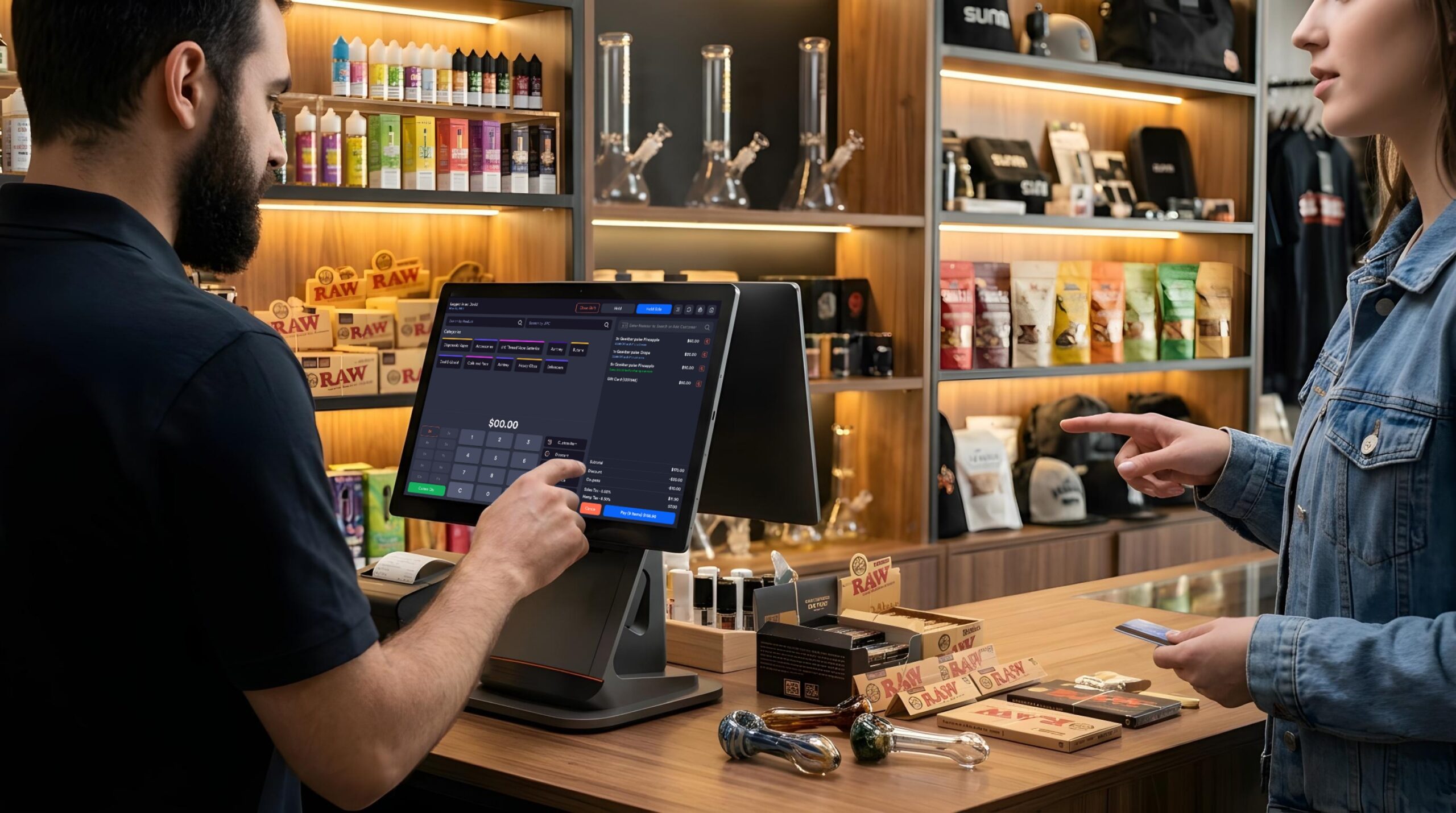
How to Increase Smoke Shop Sales with Online Ordering
A smoke shop owner I talked to last month said something that stuck with me:
That’s the shape of the problem in 2026. Foot traffic is softer, and customer expectations around delivery and pickup are basically non-negotiable now.
Even categories that used to be counter-impulse buys — kratom, Delta-8, vapes, accessories — are becoming planned, ordered-ahead-of-time purchases.
Online ordering isn’t a “nice to have” anymore. It’s table stakes.
The real question is whether you’ll do it the right way — your own website, your margins, your customer relationships — or the wrong way: handing 20–30% to DoorDash and UberEats, and renting your customers from a marketplace that owns them.
This post is about doing it the right way — seven specific tactics that actually move the sales number once you’re set up.
The math on third-party marketplaces
Let me get this out of the way first.
If you list your store on DoorDash, UberEats, or GoPuff, you’re paying somewhere between 15% and 30% per order in commission. On a $40 average ticket, that’s $6–$12 you don’t keep. On a low-margin SKU like a single can of Zyn, the marketplace just took your entire markup.
And here’s the part most owners don’t think about: those customers are not yours. They live inside the DoorDash app. When DoorDash decides to promote a competing shop, or change its algorithm, or raise its commission to 35%, you have no relationship with the customer to fall back on. You can’t email them. You can’t text them an offer. They’re DoorDash’s customer who happened to order from you once.
Compare that with a customer ordering from yourshop.com:
- You keep 100% of the margin (minus payment processing)
- You collect their email, name, and phone
- You can market to them next week
- They build a habit of going to YOUR site, not DoorDash’s app
The third-party marketplace model made sense five years ago when building your own ordering page meant hiring a developer and paying for a Shopify subscription on top of your POS. That stopped being true a long time ago. Quickvee builds your custom online ordering webpage for you as part of the POS system — no separate e-commerce subscription, no developer, no monthly fee for the storefront layer.
Where Uber Direct fits
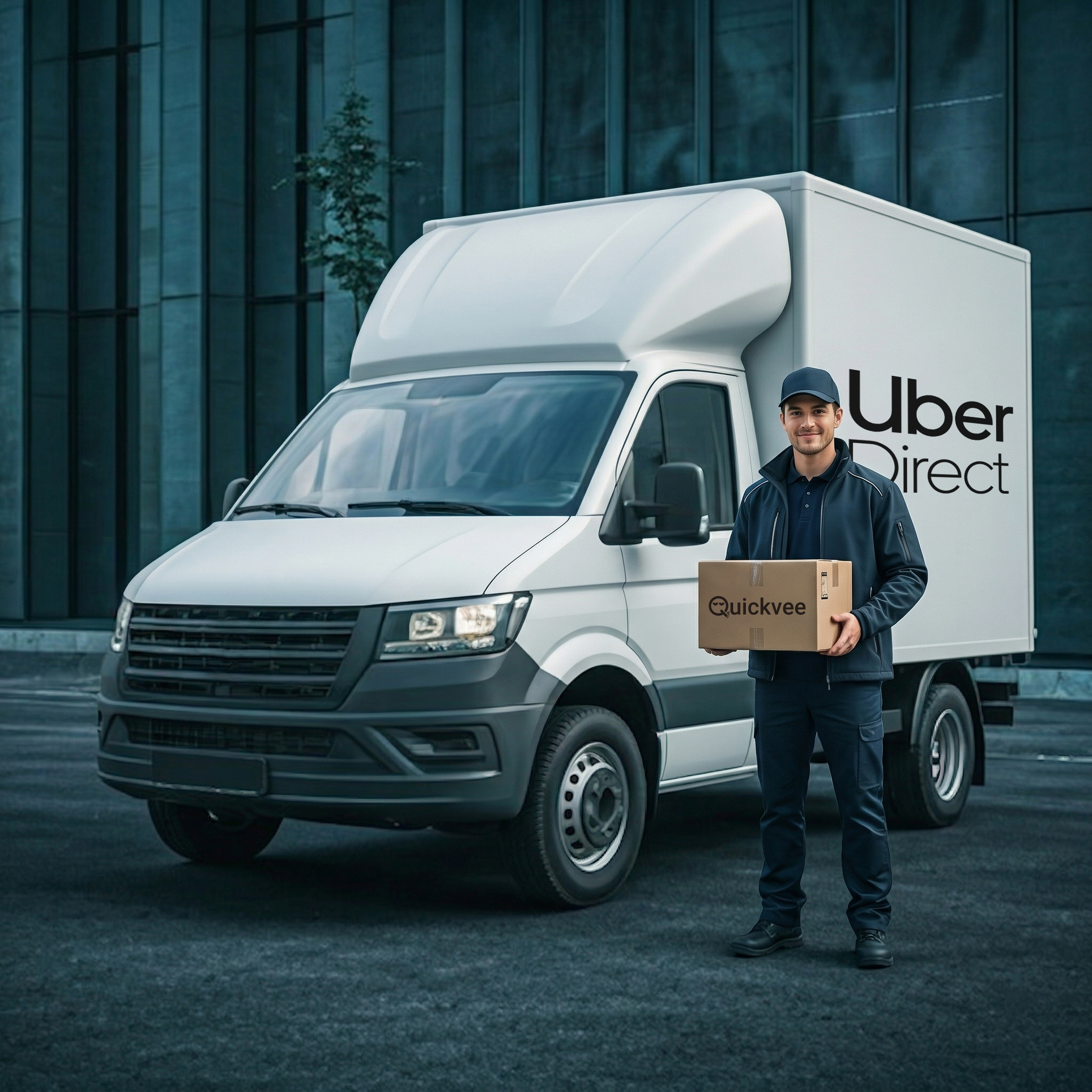
Here’s the part that confuses people: if marketplaces are bad, why does Quickvee integrate with Uber?
Because there’s a real difference between Uber’s marketplace and Uber’s delivery network.
UberEats is the marketplace — customers order from inside Uber’s app, Uber owns the customer, and Uber takes a percentage of every transaction. That’s the model we just said is bad.
Uber Direct is something else entirely. It’s the white-label delivery network. The customer orders on yourshop.com, places the order, you accept it in the Quickvee dashboard, and an Uber driver shows up to deliver it. Your brand on the bag. Your packaging. Your relationship with the customer. Uber is just the driver. You pay a flat per-delivery fee instead of percentage commission.
For most smoke shops, Uber Direct is the right move because:
- You don’t need to hire drivers or run background checks
- You don’t need commercial delivery insurance on your own vehicles
- You only pay when you actually have a delivery — no fixed overhead
- You can also use your own drivers (through Quickvee’s built-in Dispatch Center) for orders that make sense to deliver in-house
Some shops we work with run both: their own drivers within a 2-mile radius (cheaper at high volume) and Uber Direct for everything beyond that (no driver overhead). The Quickvee dashboard routes orders to whichever fulfillment option you’ve set for that zone, automatically.
What about age verification?
This is the question that stops most owners from launching online delivery in the first place. It’s a fair concern. It’s also a solved problem.
Quickvee handles age verification in two layers:
Online ID upload at checkout.
When a customer places an order for tobacco, vapes, kratom, Delta-8, or CBD, they upload a photo of their ID at the digital checkout. The order is flagged age-restricted in your dashboard and the customer’s ID is attached to the order record.
In-person verification at handoff.
Whether it’s pickup at your counter or delivery by an Uber driver, the customer has to show ID again when they receive the order. Your cashier scans it for pickup (same workflow as an in-store sale). For delivery, the Uber driver verifies before handing off, and the order is only marked complete after that confirmation. No ID, no handoff — the order goes back.
This is the same workflow cannabis dispensaries have been running for years. The legal framework is established, the customer expectation is set, and the platform handles the mechanics. Don’t let the age question stop you from launching.
Seven tactics that actually increase sales
Online ordering on its own doesn’t print money. It has to be set up well and promoted right. Here’s what we see working
in the shops that are getting real lift from it.
1 Run a “Reorder Your Last Order” prompt in every monthly email
The single highest-converting email a smoke shop can send is a one-tap reorder of someone’s last purchase. Pull purchase data from Quickvee, segment customers who ordered in the last 30–60 days, and send them an email that says “Restock?” with the exact items they bought last time and a button to add them all to cart at once.
Conversion on these emails is typically several times higher than a normal promo email, because you’re removing the decision friction — the customer already knows they like the product, they’re just deciding whether to reorder today.
2 Use “Frequently Bought Together” upsells on every product page
This is a setting in your Quickvee Dashboard. When a customer adds a vape device to cart, the page suggests the pods, the case, the cleaning kit. When they add a kratom product, the page suggests a different strain at a bundle price.
The trick is to suggest things people actually buy together (use your real sales data from Quickvee reports, don’t guess), and to keep the upsell at $5–$15 — a small impulse add-on, not a second major purchase decision.
3 Bundle slow-movers with bestsellers
If you’ve got a SKU sitting on the shelf for 90+ days and a SKU that flies off, bundle them. “Buy the [bestseller], get [slow mover] for $1.” This is one of the few ways to move dead inventory without taking a margin hit on your hot SKU. Run these as featured online-only deals and tag them clearly on your ordering page.
4 Offer pickup-only “online special” pricing
Counterintuitive move that works: offer a 5–10% discount on online orders for pickup only. Two reasons it works.
One, it pulls people from the counter (where they’re impulse-buying one thing) to online (where they’re building a planned basket that’s typically two to three times bigger). Two, it gets you their email address and starts building your direct customer database — the database you’ll use for tactic #1.
5 Run late-night delivery hours your competitors don’t
If your store closes at 9pm but you can fulfill scheduled delivery orders until midnight through Uber Direct, you’ve just captured a window where almost no one is competing for the same customer.
Friday and Saturday 9pm–midnight orders for kratom, vapes, and snacks are some of the highest-ticket orders we see in the data. And because Quickvee lets you accept scheduled orders, you don’t even need to be in the store — orders queue up and your team can prep them to open the next morning if the customer scheduled delivery for them.
6 Treat your online catalog as a different store
Don’t just dump your entire in-store inventory online and call it done. Curate the online catalog. Highlight your best margins. Hide the SKUs you’re trying to clear in-store only. Run online-exclusive SKUs (limited editions, gift bundles for holidays).
The Quickvee Dashboard lets you enable specific products for online ordering without changing what’s available in-store. Use that. A curated online catalog of 30–80 SKUs converts better than a chaotic catalog of 800.
7 Promote online ordering at the counter
This is the one most shops skip. They set up online ordering and then never tell anyone. The result: their online channel limps along at 5–10% of total sales when it should be 20–40%.
- The fastest way to grow online order volume is to convert your existing in-store customers into repeat online customers. Specifically:
- Print a QR code on every receipt that links to your online ordering page
- Put a sign at the counter that says “Skip the line next time — order ahead at yourshop.com”
- Train cashiers to mention it during the transaction (“You can order this online for pickup next time if you want”)
- Print branded packaging with your URL on it so delivery customers see the website on the bag
Online ordering doesn’t replace your in-store business. It adds a second register that runs 24/7, doesn’t take breaks, doesn’t call out sick, and surfaces customers you’d otherwise lose to the dispensary down the street with a delivery option. The shops we see winning in 2026 are the ones treating their online channel with the same seriousness as their physical one.
The blog's core answer: build your own online ordering channel instead of relying on foot traffic alone. Shops that add ordering, curate a tight online catalog (30–80 SKUs), and promote it at the counter (QR codes, signage, cashier mentions) typically grow online orders to 20–40% of total sales — a second revenue stream that runs 24/7.
Per the article, the fastest lever is promoting a channel you may have already set up but never advertised. Printing a QR code on receipts and training cashiers to mention online ordering during checkout costs nothing and converts existing in-store customers into repeat online buyers almost immediately.
The blog outlines several concrete tactics: send "Reorder Your Last Order" emails to recent customers (highest-converting email type), add "Frequently Bought Together" upsells ($5–$15 impulse add-ons) on product pages, and offer a 5–10% online-only pickup discount to shift customers from single-item counter purchases to larger planned online baskets.
Rather than only pulling new customers in, the article emphasizes capturing demand you're currently losing — like offering delivery until midnight (via Uber Direct) when your store closes at 9pm, which captures customers who'd otherwise order from a dispensary with delivery instead.
Margins get squeezed fastest by third-party marketplace fees — DoorDash and UberEats charge 15–30% commission per order, which can wipe out the entire margin on a low-margin item like a single can of Zyn. Running your own ordering site keeps that margin in-house (minus standard payment processing), which the blog frames as the real profitability lever in 2026.
This general sales-follow-up concept (contacting a lead at 2 days, 2 weeks, and 2 months) isn't something this article addresses — it's outside the scope of this piece, which is specifically about online ordering infrastructure and delivery logistics. I'd flag this one for a different blog (or skip it) rather than force an answer that doesn't reflect the article's content.
Third-party marketplaces charge 15–30% commission per order and you never get direct access to the customer — they stay inside the DoorDash app, not your database. Running your own ordering site keeps 100% of your margin (minus payment processing) and lets you build an email/SMS list you can market to directly.
Recent Blogs
Is THC Banned in 2026? State-by-State Guide for Retailers
August 24, 2026
Square CBD Shutdown: What Hemp and CBD Merchants Need to Do Now
August 11, 2026
Delta 8 vs Delta 9 vs THCA: 2026 Smoke Shop Guide
July 16, 2026
How to Increase Smoke Shop Sales with Online Ordering
June 10, 2026